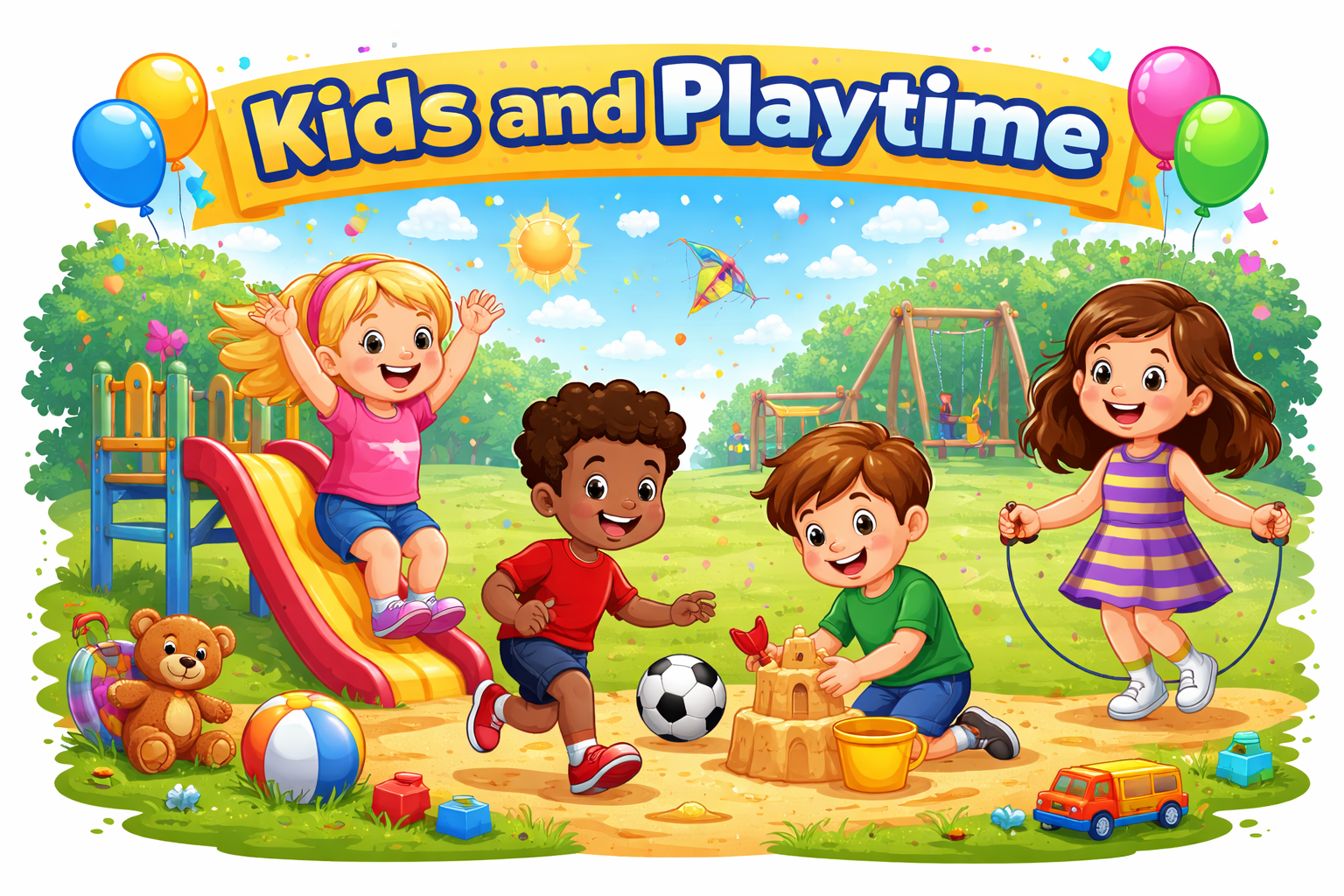
Playtime is not just about fun and toys — it is one of the most important parts of a child’s early growth. From tiny babies to busy toddlers, play helps children learn, grow, and understand the world around them.
Let’s see how play helps little ones grow strong and smart! ?
Playtime and Infant Development
In the first year, babies grow and change very quickly. Even simple play helps them reach important milestones.
?️ Motor Skills:
When a baby grabs your finger, kicks their legs, or reaches for a toy, they are building muscle strength and coordination.
? Brain Development:
Babies learn through their senses — touching, seeing, hearing, tasting, and smelling. Sensory play helps their brain grow and understand patterns.
? Simple Play Ideas:
- Peek-a-boo
- Singing songs
- Playing with soft or textured toys
- Making funny faces
These small games teach babies about cause and effect — like “If I shake this toy, it makes a sound!”
? Physical Growth
Running, jumping, and climbing build gross motor skills (big muscles).
Drawing, stacking blocks, and turning pages build fine motor skills (small hand movements).
? Social Skills
Playing with others teaches toddlers to:
- Share
- Take turns
- Talk and listen
- Solve small problems
These skills help children learn kindness and teamwork.
? Emotional Growth
Pretend play (like cooking or playing doctor) helps toddlers:
- Express feelings
- Understand others
- Manage fears
- Build confidence
Play gives children a safe way to explore big emotions.
? Play and Development Milestones
Play helps children practice important life skills.
✋ Fine Motor Practice
Fun activities like:
- Playing with playdough
- Threading beads
- Building block towers
These improve hand-eye coordination and creativity.
? Thinking Skills
Around age two, many toddlers can:
- Solve simple puzzles
- Pretend cook
- Sort shapes
- Follow simple game rules
These show growth in thinking and problem-solving skills.
? Play and Brain Development
Play helps children learn how to think and remember.
? Encouraging Curiosity
Building blocks, sorting shapes, and pretend games help children:
- Solve problems
- Think creatively
- Explore new ideas
? Memory and Focus
Games like:
- Simon Says
- Matching games
- Simple board games
These improve memory and concentration.
? Growing Independence
When children play, they:
- Make choices
- Try new ideas
- Learn what they enjoy
- Build confidence
Play helps children feel proud of what they can do!
? Building a Strong Foundation
The skills children learn through play become the base for:
- School learning
- Friendships
- Emotional strength
- Future success
✨ Final Thoughts
Playtime is not “just play.” It is one of the most powerful ways children grow and learn.
By giving babies and toddlers time to play every day, parents and caregivers help them grow stronger, smarter, happier, and more confident.
So let them explore, imagine, build, laugh, and play! ?
Because when children play, they truly shine. ?